|
Home
|
Nov 20, 2026
This week’s themeTerms derived from language names This week’s words latimer Wardour Street English greek pedlar's French Esperanto 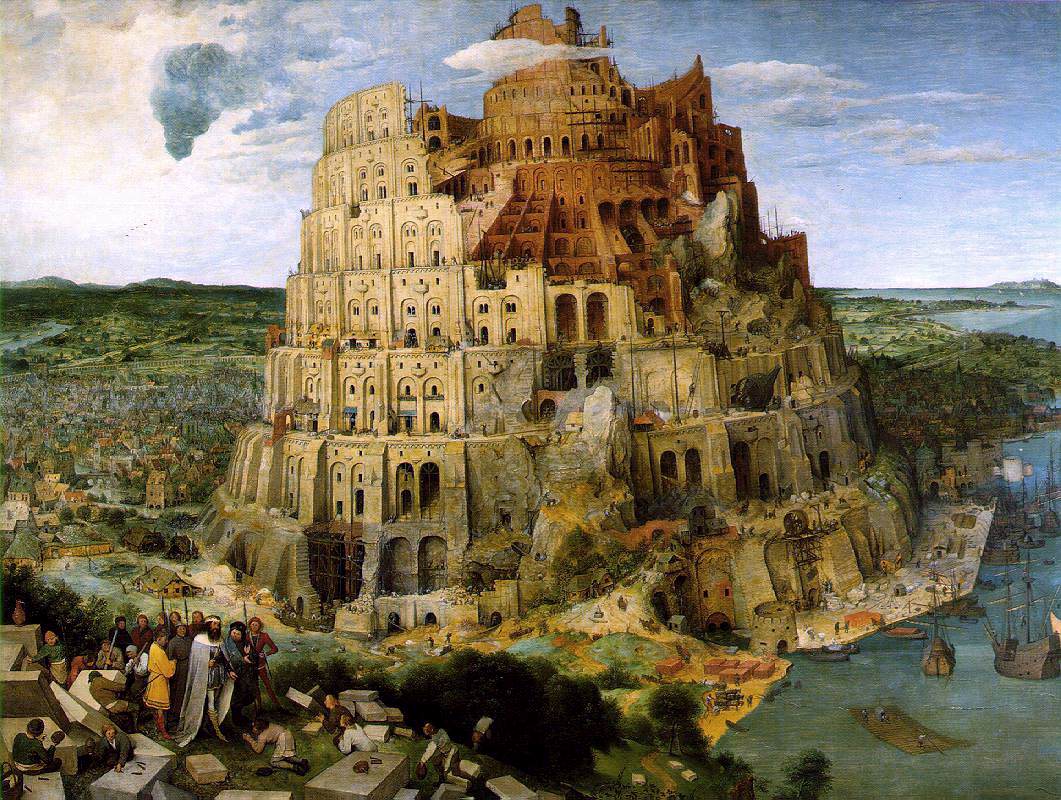
The Tower of Babel, 1563
Art: Pieter Bruegel the Elder Wordsmith Games
A.Word.A.Day
with Anu GargEsperanto
PRONUNCIATION:
(es-puh-RAHN/RAN-to)

MEANING:
noun: 1. A constructed language designed for use as an international second language. 2. A shared means of communication or expression across cultural or other boundaries. ETYMOLOGY:
After Doktoro Esperanto, pseudonym of L.L. Zamenhof, Polish ophthalmologist.
Earliest documented use: 1888.
NOTES:
Zamenhof was an eye doctor who wanted people to see eye to eye.
He grew up in Białystok (then in the Russian Empire, now in Poland),
where four groups -- Russians, Poles, Germans, and Yiddish-speaking
Jews -- lived side by side in mutual suspicion. He hoped a shared
second language could help people understand one another and live
more peacefully. In 1887, he published his “International Language” under the pen name Doktoro Esperanto, or Doctor Hopeful. Esperanto means “one who hopes”, ultimately from Latin sperare (to hope). Those who learned the language began calling it Esperanto after its creator’s pseudonym, and the name stuck. USAGE:
“[T]he theme song was pure Esperanto, a joyous surge of energy and desire
that was instantly comprehensible from Quito to Tehran.” James Brooke-Smith; Accelerate!: A History of the 1990s; The History Press; 2022. See more usage examples of Esperanto in Vocabulary.com’s dictionary. A THOUGHT FOR TODAY:
The rich everywhere remark the poor's ignorance of the bravely borne
burdens of privilege. -Nadine Gordimer, novelist, Nobel laureate (20 Nov
1923-2014)
|
|
Subscriber Services
Awards | Stats | Links | Privacy Policy
Contribute | Advertise
Awards | Stats | Links | Privacy Policy
Contribute | Advertise
© 1994-2026 Wordsmith